
How to Clean a Cigar Cutter for a Perfect Cut Every Time
Table of Contents
- Why a Clean Cigar Cutter Cuts Better
- Supplies You Need Before You Start
- Step-by-Step: How to Clean a Cigar Cutter
- How to Clean Cigar Cutter Blades Without Dulling Them
- How to Remove Tobacco Residue From a Cigar Cutter
- How Often to Clean a Cigar Cutter
- Cigar Cutter Maintenance Beyond Cleaning
- Safety Warnings When Cleaning Sharp Blades
- Frequently Asked Questions
Last Updated: November 17, 2026
Why a Clean Cigar Cutter Cuts Better
A clean cigar cutter is the difference between a crisp, even cut and a ragged cap that unravels mid-smoke.
Most guides tell you to clean your cutter "regularly" and leave it at that. But a cigar cutter is a precision tool, and how you clean it matters as much as how often.
Every cut leaves behind plant oils, tar, and tiny tobacco fibers that stick to the blade edge and the channel where the blade travels.
Below, we'll show you exactly how to clean a cigar cutter step by step, which supplies actually work, and the mistakes that quietly ruin blades. It takes about five minutes, and you probably already own most of what you need.
Supplies You Need Before You Start
Gather these supplies before you touch the cutter, so you won't leave the blades exposed while rummaging through a drawer.
- Isopropyl alcohol (70% is ideal; higher concentrations evaporate faster but can dry out some finishes)
- Cotton swabs or Q-tips
- A soft microfiber cloth or paper towel
- A pipe cleaner (for the pivot and hard-to-reach channels)
- An old toothbrush (soft bristles only)
- Compressed air (optional but useful for blowing out loose fibers)
- A small dish to hold the swabs and alcohol
You don't need soap and water for routine cleaning. In fact, water is the enemy of most cutters, and we'll explain why in a moment.
Step-by-Step: How to Clean a Cigar Cutter
The full process takes about five minutes for most cutters, but the details change with the mechanism. A guillotine and a punch cutter do not have the same cleaning points, and treating them the same is how people bend blades or flood a spring. Below is the core procedure, followed by the cutter-specific adjustments most guides skip.
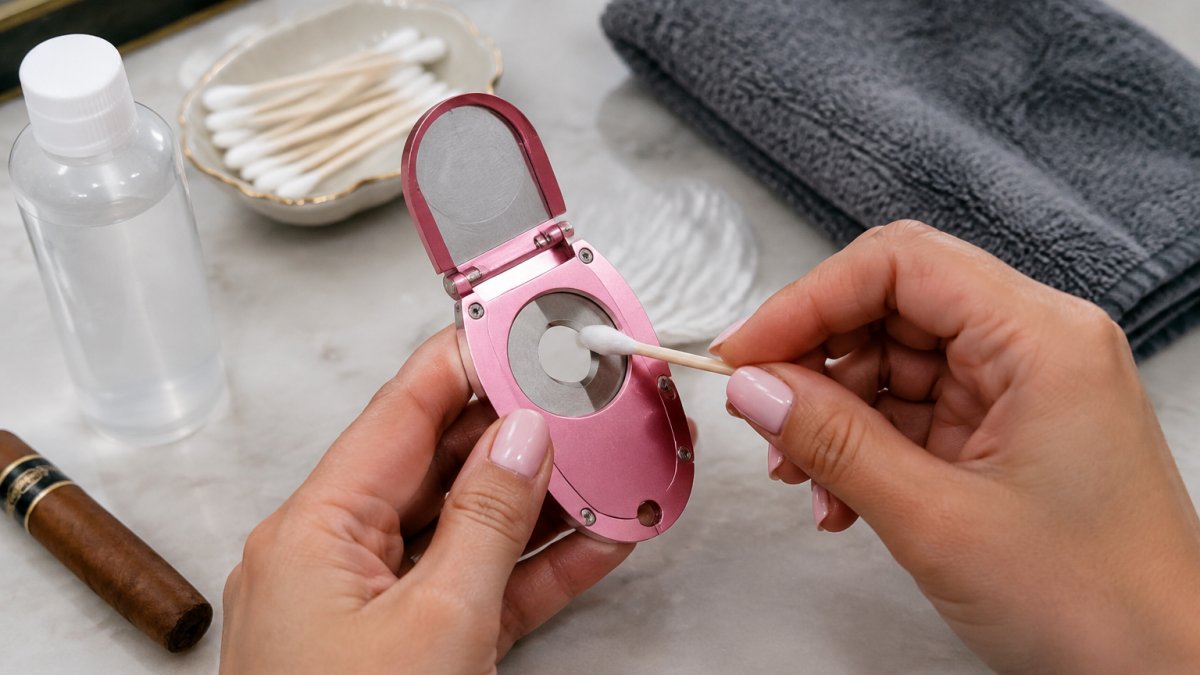
Step 1: Open the Cutter and Brush Away Loose Residue
Open the cutter fully so both blades are exposed. Hold it over a trash bin and use the soft toothbrush or compressed air to knock loose tobacco fibers out of the channel and off the blade faces.
Work from the hinge outward, since most loose debris collects near the pivot point where the blade swings. If you want to handle and open your cutter correctly before cleaning, our guide on 7 Steps to Master Your Guillotine Cigar Cutter walks through the proper grip and motion.
Don't press hard with the brush. You're lifting debris, not scrubbing a grill. For a punch cutter, brush the inside of the circular cutting tube and the open face of the punch rather than a blade edge.
Step 2: Wipe the Blades with Isopropyl Alcohol
Dip a cotton swab in the isopropyl alcohol and wipe along each blade edge, from the base to the tip. Move in one direction, away from your fingers.
The alcohol dissolves tar and plant oils on contact. You'll see the swab turn brown, which is exactly what you want. Use a fresh swab for each pass until it comes away clean.
For the flat face of the blade, a cloth dampened with alcohol works faster than a swab. Wipe, then flip the cutter and repeat on the other side. On a V-cut, wipe each angled face separately and use a fresh swab at the notch where they meet, since residue packs in there.
Step 3: Reach Into Grooves and Channels
The channel where the blade travels is where buildup hides. Run a pipe cleaner dipped in alcohol through the groove, working it back and forth a few times.
For the pivot screw area, use a fresh swab with a small amount of alcohol and twist gently. Don't flood the hinge, since excess alcohol can carry debris deeper into the mechanism.
If your cutter has a hex screw at the pivot, you can loosen it slightly to clean underneath, then retighten. Don't remove it entirely unless you're confident you can reassemble it.
Step 4: Dry Completely and Reassemble
Wipe every surface dry with the microfiber cloth. Then let the cutter sit open for a few minutes so any remaining alcohol evaporates.
This step matters more than people think. Alcohol left in the hinge attracts dust and can break down lubricant. Pay special attention to the inside of a punch cutter's tube, where moisture and tar collect out of sight.
Once dry, close the cutter and test the action. It should feel smooth, with no grit or resistance.
Cutter-Specific Adjustments
Guillotine and double-blade cutters. These have the most exposed edge and the most channel surface. Clean both blade faces and both channels, and check that the blades meet evenly when closed.
V-cut cutters. The wedge-shaped blade creates a deep notch that traps tar.
Punch cutters. There is no exposed blade edge in the same sense; the cutting edge is the rim of the circular tube. Brush and swab the inside of the tube, then wipe the rim.
Spring-assisted and locking cutters. If your cutter has a spring or a locking mechanism, keep alcohol to a minimum around those parts and let the tool dry fully open before closing it.
How to Clean Cigar Cutter Blades Without Dulling Them
The fastest way to ruin a blade is to clean it with the wrong tool. Steel is tough, but the fine edge is fragile.
Never use abrasive pads, steel wool, or gritty cleansers on the blade. These micro-scratches feel invisible, but they create drag with every cut.
Never scrub the edge perpendicular to the blade. Wipe along the edge, not across it. Cross-wise scrubbing rolls the fine edge over.
Skip the dishwasher and the sink.
A common mistake is pressing hard with a cotton swab. Light pressure plus alcohol does the work; force only risks bending the edge.
How to Remove Tobacco Residue From a Cigar Cutter
Tobacco residue is sticky, dark, and stubborn. It's a mix of tar, oils, and ash that bonds to metal surfaces.
Isopropyl alcohol is the best solvent for the job. It breaks down tar quickly and evaporates without leaving a film.
For heavy buildup, hold an alcohol-dampened cloth against the residue for about thirty seconds before wiping. The tar softens and lifts away.
Avoid scraping with metal tools. A fingernail or a wooden toothpick can lift a stubborn spot without scratching the blade face.
If residue has built up inside the channel, a pipe cleaner soaked in alcohol is your best tool. Work it through slowly and replace it when it turns dark.
How Often to Clean a Cigar Cutter
A quick wipe after every few cigars keeps a cutter in good shape. A full cleaning every ten to fifteen cuts is enough for most smokers.
Here's a simple schedule to follow:
| Frequency | Task | Time Needed |
|---|---|---|
| After every use | Blow out loose fibers, wipe blade faces | 30 seconds |
| Every 10-15 cuts | Full alcohol cleaning of blades and channel | 5 minutes |
| Monthly | Clean pivot, check screw tension, lubricate | 10 minutes |
| After travel or storage | Inspect for residue and rust, clean before use | 5 minutes |
If you smoke daily, clean weekly. If you smoke once a month, a full clean before each session is smart.
Travelers should pay extra attention. A cutter rattling around in a bag picks up lint and grit. If you're thinking about cleaning routines on the road, our guide to discreet cigar accessories for travel covers gear that holds up well in a carry-on.
Cigar Cutter Maintenance Beyond Cleaning
Cleaning is only half of cutter care. The other half is keeping the mechanism working smoothly without contaminating the next cigar or damaging the finish.
Lubricant and Solvent Safety
A tiny drop of lubricant on the pivot once a month keeps the action smooth, but where it goes matters as much as what you use.
Use a light machine oil or a graphite-based lubricant. Avoid cooking oil, which turns gummy, and heavy grease, which traps lint and tobacco dust. A dry lubricant or a very small amount of light oil is safer than a wet product near the cutting edge.
Isopropyl alcohol is the right solvent for routine cleaning because it evaporates cleanly. Avoid acetone, paint thinner, and harsh degreasers, which can dull a finish or attack plastic and painted components.
Screws, Tension, and Storage
Check the hex screw or pivot screw periodically. If the blades feel loose or wobbly, tighten gently. Over-tightening is worse than leaving it slightly loose, since it strains the spring and makes the action stiff.
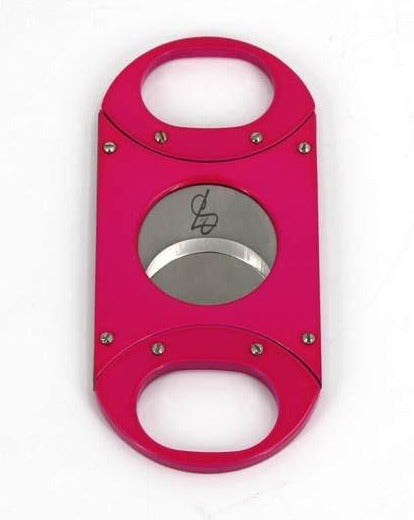
Store your cutter closed and dry. A velvet pouch or a case keeps dust off the blades between smokes. If you want a cutter worth maintaining for years, the Socialite Signature Cigar Cutter is built from stainless steel with a double blade that holds its edge well with regular care.
Troubleshooting After Cleaning
If the cutter still misbehaves after a full clean and dry, the problem is usually mechanical rather than residue.
Sticky or stiff action. Residual solvent or too much lubricant in the pivot is the usual cause.
Blades that no longer meet evenly. This is an alignment issue, not a cleaning issue.
A cut that crushes instead of slices. If the blade is clean and the action is smooth but the cap still tears, the edge is dull.
Residue that returns immediately. If tar reappears after one or two cuts, the channel may still hold softened residue deeper than the pipe cleaner reaches. Loosen the pivot screw slightly, clean underneath, dry fully, and retighten.
Stainless steel resists rust but is not rust-proof. If you see spotting, clean with alcohol, dry thoroughly, and keep the cutter out of humid environments.
What most guides miss is that a dull blade can't be fixed by cleaning.
Safety Warnings When Cleaning Sharp Blades
Cigar cutter blades are sharp enough to slice a fingertip before you feel it. Take these precautions every time you clean.
- Keep fingers behind the blade edge, never in front of it
- Clean in good light so you can see exactly where the edge sits
- Never clean a cutter while distracted or in a hurry
- Keep alcohol away from open flames; it's flammable
- Work over a surface where a dropped cutter won't damage anything or bounce
- Store blades closed when you're not actively cleaning them
If you're building out a full kit of sharp cigar tools, our guide to the 8 best cigar accessories for women covers safe handling across cutters, punches, and lighters.
A clean cutter is a small habit with a big payoff. It protects your cigars, your investment, and the ritual you look forward to. If you're ready for a cutter that deserves the care, Lipstick and Smoke offers stainless steel double-blade cutters designed to look as good as they cut.
Frequently Asked Questions
Can you use rubbing alcohol to clean a cigar cutter?
Yes. Isopropyl alcohol, including the common 70% strength, dissolves the tar and residue that build up on cutter blades. Apply a small amount to a cotton swab or soft cloth and wipe the blades, then let the cutter air dry fully before closing it. Avoid soaking the whole cutter or pouring alcohol into the pivot, since that can strip lubrication.
How often should you clean a cigar cutter?
Wipe the blades after every few cigars, and do a fuller clean once a month if you smoke regularly. If you cut only occasionally, a thorough cleaning every two to three months is enough. Signs it's time sooner: the cut feels rough, the blades drag, or you can see dark residue in the grooves. Cleaning on a consistent schedule is the simplest form of cigar cutter maintenance and keeps the cut crisp.
Can a cigar cutter be sharpened?
Once the blades dull or nick, replacement is usually the practical answer. You can extend blade life by cleaning regularly, avoiding cutting anything other than cigars, and never twisting the cutter while it's closed on a cap. If a clean cutter still crushes rather than slices, the blades are likely worn out.
Does TSA allow cigar cutters in carry-on bags?
Check the current TSA rules for cigar cutters before you fly, since screening decisions are left to the screener. To avoid delays, pack your cutter in checked baggage when you can. A case like the [AshPinkk Cigar Case](https://www.lipstickandsmoke.com/products/ashpinkk-cigar-case) keeps the cutter protected in your bag. Always check your airline's current policy before flying, since rules can change.
