
7 Steps to Master Your Guillotine Cigar Cutter
Last Updated: November 8, 2026
Quick Summary
To use a guillotine cigar cutter, find the shoulder where the rounded cap meets the body, then close the blades in one firm, decisive push just above that line. Remove roughly 2 to 3 millimetres, cut less rather than more, and check the draw before lighting up.
- The cap is the rounded end you put in your mouth; the shoulder is the ridge below it.
- Hold the cutter square to the cigar and push through in one motion, never twisting or sawing.
- A slim panatela under 35 ring gauge needs only 1 to 2 mm removed.
- For a torpedo or belicoso, clip just the pointed tip, about 2 to 3 millimetres.
- A dull blade is the number one cause of an unraveling cigar because it crushes the wrapper.
Table of Contents
- What a Guillotine Cigar Cutter Does and Why the Cut Matters
- How to Use a Guillotine Cigar Cutter for Beginners: Step by Step
- How Much of a Cigar Cap to Cut
- How to Cut a Torpedo Cigar and Other Shaped Cigars
- Single-Blade vs Double-Blade: Choosing Your Cigar Straight Cutter
- Fixing a Bad Cut, a Tight Draw or an Unraveling Wrapper
- Caring for Your Cutter and Choosing One That Fits Your Style
- Frequently Asked Questions
What a Guillotine Cigar Cutter Does and Why the Cut Matters
A guillotine cigar cutter is a handheld tool with one or two straight blades that slice the closed end of a cigar cleanly. That single cut decides how the whole smoke draws, tastes, and burns.
Here is the truth most beginners learn the hard way: the cut is not a formality. Cut too little and you fight for every puff. Cut too deep and the wrapper unravels in your fingers.
The cap is the small rounded end that holds the whole cigar together. It acts like a lid on a hand-rolled cigar. Remove too much of it and the tobacco filler spills loose. Remove too little and airflow stays blocked.
Women new to cigar lounges often worry about fumbling at the table. A clean, confident cut solves most of that. It takes about five seconds once you know the landmarks.
Below, we walk through the exact steps, the right cut depth, and how to fix a bad cut. First, here is what most guides get wrong: they tell you to "cut the cap" without showing you where the cap actually ends.
How to Use a Guillotine Cigar Cutter for Beginners: Step by Step
Learning how to use a guillotine cigar cutter for beginners comes down to three moves: find the cap, position the blades, and cut with one firm motion. Master those and you will cut well every time.
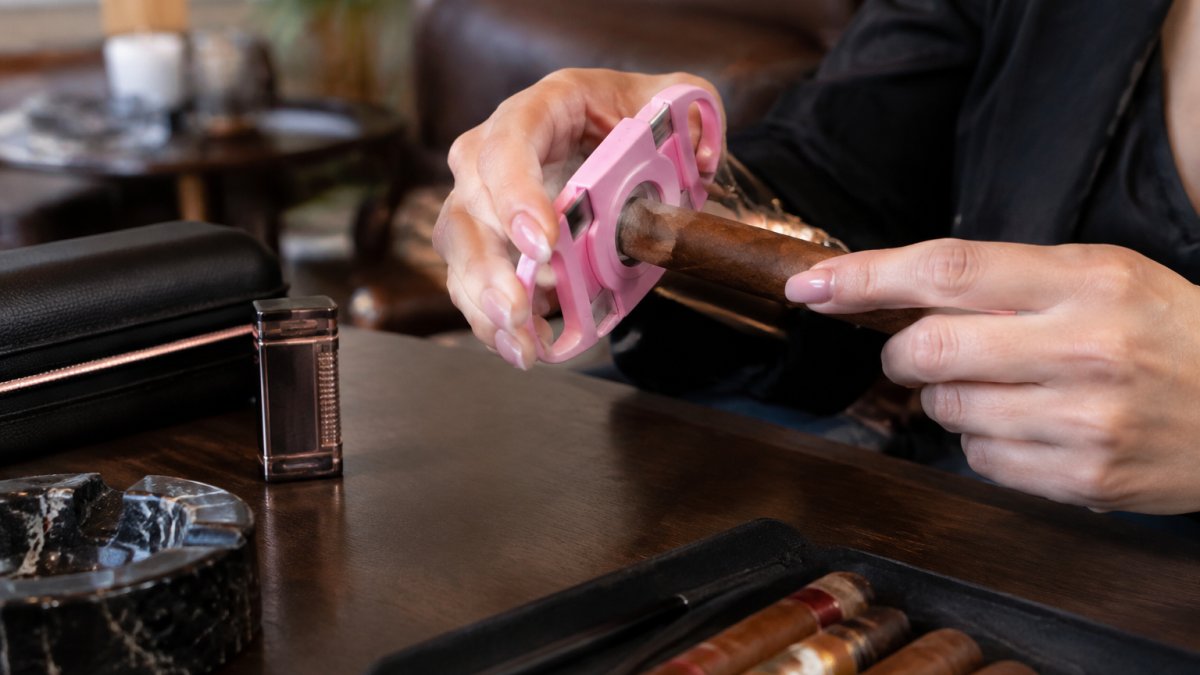
Step 1: Find the Cap and Shoulder
The cap is the smooth, rounded end you put in your mouth. The shoulder is the ridge where that rounded cap meets the straight body of the cigar.
Run your thumb along the head until you feel that ridge. That line is your guide. You want to cut above the shoulder, never below it.
Step 2: Open, Position and Cut
Open the blades fully. Rest the cigar head in the opening so the cut line sits just above the shoulder, then close the blades in one firm, decisive push.
- Hold the cigar steady with your free hand
- Align the cutter so the blade sits square to the cigar
- Push through in one motion, not a slow squeeze
- Never twist or saw at the tobacco
A single confident cut gives you a clean cut line. A hesitant one crushes the wrapper.
Step 3: Check the Draw
Take a cold draw before you light up. Pull air through the unlit cigar and feel the airflow.
If air moves freely, you are ready. If the draw feels tight, you have cut too little. If tobacco crumbs fall loose, you cut too deep.
How Much of a Cigar Cap to Cut
The right amount to remove is roughly 2 to 3 millimetres, just enough to expose the filler without touching the shoulder. Think of it as shaving off the tip, not slicing off the top.
Cut depth depends on the ring gauge. A slim cigar needs less removed than a thick one.
| Cigar Size | Ring Gauge | Cut Depth | What to Watch |
|---|---|---|---|
| Slim panatela | Under 35 | 1-2 mm | Easy to overcut |
| Corona | 40-44 | 2-3 mm | Standard starting point |
| Robusto | 48-52 | 3-4 mm | Keep blades square |
| Toro or larger | 50+ | 3-4 mm | Check draw carefully |
Cut Depth
Here is the insider tip: when in doubt, cut less. You can always remove more tobacco, but you cannot put it back.
How to Cut a Torpedo Cigar and Other Shaped Cigars
Shaped cigars, torpedoes, belicosos, pyramids, perfectos, and other figurados, need a smaller, shallower cut than a straight-sided cigar because the head tapers to a point. The taper already concentrates airflow, so removing the very tip is usually enough.
The mechanism is simple: on a tapered head, the cap wraps around a narrowing cone of filler. Cut too deep and you remove the structural ring that holds the cone together. Cut just the tip and you expose the filler without disturbing the cap's grip on the body.
For a torpedo or belicoso, remove just the pointed end, about 2 to 3 millimetres. That small opening is usually enough for good airflow. Test the draw before cutting again.
- Torpedo: clip the tip only, never the tapered shoulder. The point is the cap; the shoulder is the ridge below it.
- Pyramid: remove just the point. The taper does the work, so a 2 mm cut is often enough.
- Perfecto: cut the smaller closed end and keep it shallow. Perfectos often have a closed foot too, so check which end is which before cutting.
- Figurado: start small and test the draw before cutting again. A second 1 mm trim is safer than a first 4 mm slice.
Ring gauge changes the cutter opening you need. A 60-ring-gauge figurado may not fit a small cutter's opening, so open the blades fully and seat the cigar against the back of the opening before closing. If the cutter pinches the cigar before the blade reaches the cap, the opening is too small, use a larger cutter rather than forcing it.
Cap shape matters too. A rounded cap on a parejo (straight-sided cigar) gives you a clear shoulder to feel. A tapered cap on a figurado may have almost no visible shoulder, so rely on the point itself as your landmark. Run your thumb along the head until you feel where the taper begins; that is your safe cut line.
Watch out: on a sharply tapered pyramid, a cut that looks level can still sit below the cap on one side because the head is asymmetric. Rotate the cigar a quarter turn and check the cut line before closing the blades.
A common pattern among experienced smokers is to carry a small cutter for figurados and a larger one for thick parejos, because the same opening that fits a 40-ring corona will crush a 60-ring perfecto. If you only own one cutter, open it fully and let the cigar rest against the back of the opening rather than forcing it between the blades.
Single-Blade vs Double-Blade: Choosing Your Cigar Straight Cutter
A double-blade cutter gives a cleaner, more even cut because both blades meet in the middle. A single-blade cutter works well but can crush the tobacco on one side if the blade is dull.
Double-blade cutters suit most smokers. The two blades meet evenly, so the pressure stays balanced. Single-blade cutters are simpler and often smaller, which helps if you travel light.
Our pick for everyday use is The Socialite Signature Cigar Cutter, a stainless steel double-blade cutter sized to slip into a small bag.

Watch out: cheap blades dull fast. A dull cutting edge tears the wrapper instead of slicing it, and that is the number one cause of an unraveling cigar.
Fixing a Bad Cut, a Tight Draw or an Unraveling Wrapper
Most cutting problems have a simple fix, and none of them mean the cigar is ruined. Diagnose the issue, then correct it with a small second cut.
- Tight draw: cut another 2 millimetres off the cap and test again
- Uneven cut: trim the high side so the cut line sits level
- Loose tobacco in your mouth: you cut below the cap, so cut higher next time
- Unraveling wrapper: press the leaf back gently and avoid handling that spot
If the draw stays tight after a second cut, the problem may be the cigar's construction, not your cut. A plugged cigar happens with hand-rolled cigars, and no cutter fixes it.
Safety matters too. Keep your fingers behind the blade, close the cutter fully before you set it down, and never cut toward your hand. A sharp blade is safer than a dull one because it needs less force.
Caring for Your Cutter and Choosing One That Fits Your Style
A good cutter lasts years if you keep it clean, dry, and sharp. Most cutting problems, crushed caps, torn wrappers, uneven cuts, trace back to a dull or dirty blade rather than bad technique. Blade maintenance is the gap most guides skip, so here is the practical version.
Cleaning. Wipe the blades after every use with a dry cloth or a cotton swab to remove tobacco dust and oils. Tobacco residue hardens on the edge and makes the blade drag instead of slice. Once a month, open the cutter fully and brush out the hinge area with a soft toothbrush; dust packed into the pivot keeps the blades from meeting squarely.
Sharpening. Some guillotine cutters use replaceable blades and others use fixed blades; check your cutter's construction before deciding how to maintain it. A dull blade is the number one cause of an unraveling cigar because it crushes the wrapper instead of cutting it.
Storage. Store the cutter closed and keep it dry, away from keys and loose change, to help protect the blade edge.
When to replace.
Choosing one that fits your style. Your cutter is part of your kit, so pick one that matches how you smoke. A double-blade cutter gives a cleaner, more even cut because both blades meet in the middle; a single-blade cutter is simpler and often smaller, which helps if you travel light.
If you want ideas beyond the cutter itself, our guide to the 8 best cigar accessories for women covers the wider set. Traveling smokers often ask whether a case is worth adding; our breakdown of whether a leather cigar case for travel is worth it walks through storage and portability, and our PU leather cases hold three cigars plus a cutter.
The cut is the one part of cigar smoking you fully control, and it shapes everything that follows. Lipstick and Smoke makes that first step easier with a stainless steel double-blade cutter, PU leather travel cases that hold three cigars, and a community of women who share the ritual. Get started with Lipstick and Smoke and cut with confidence at your next lounge night.
Frequently Asked Questions
How much of a cigar cap should you cut off?
Cut only the very top of the cap, roughly 1 to 2 millimetres, just above where the rounded end meets the straight sides of the cigar. The cap is the small leaf holding the wrapper in place, so removing too much lets the wrapper unravel. If the draw feels tight after the first cut, take a thin slice more rather than cutting deep in one go.
Do you cut both ends of a cigar?
No. Only the closed, rounded end, known as the head or cap, gets cut. The other end, the foot, is already open and is the end you light. Cutting the foot damages the wrapper and wastes tobacco. A guillotine cigar cutter is designed for a single straight cut on the cap side only.
What should you do if a cigar starts unraveling after you cut it?
Lay the cigar down and press the loose wrapper edge back into place with a clean finger, then light and smoke gently. If the damage is small, a touch of flavourless pectin or a cigar glue stick can seal it. Unraveling usually means the cut went below the cap line, so on your next cigar position the cutter higher and remove less.
Can you use a guillotine cutter on a torpedo cigar?
Yes, but the technique differs. A torpedo has a tapered, pointed head, so you cut a small amount off the tip first and test the draw. If it is still tight, take another thin slice. Cutting too far down the taper creates an opening wider than the ring gauge of the body and ruins the draw. Sharp blades and a decisive cut keep the taper intact.
