
Cigar Smoking Tips for Women Who Are Just Starting Out
Last Updated: November 7, 2026
Quick Summary
Start with a mild, medium-sized cigar, plan to smoke for about 30 minutes, and eat a light meal and drink water first. Cut only about 1/8 inch from the cap, toast the foot before lighting, and let the ash grow to about an inch before tapping it off. These cigar smoking tips help first-timers stay comfortable.
- Choose a mild to medium cigar, about 4 to 5 inches long, for your first session.
- Cut about 1/8 inch, roughly two-thirds of the cap, and take a cold draw before lighting.
- Toast the foot for 10 to 20 seconds, rotating just above the flame, before lighting.
- Let ash grow to about an inch before tapping it off, and rotate the cigar to prevent tunneling.
- If you feel dizzy or nauseous, put the cigar down, get fresh air, and sip water.
Table of Contents
- Why a First Cigar Feels Different for Women and How to Start Comfortably
- How to Choose the Best Cigars for Beginners
- How to Cut and Light a Cigar Step by Step
- How to Smoke a Cigar: Draw, Pace, and Ash Management
- Cigar Lounge Etiquette for Women: Sharing, Hygiene, and Confidence
- Nicotine Safety, Pairing Drinks, and What to Do If You Feel Unwell
- Storing Your Cigars and Booking Your Next Lounge Night
- Frequently Asked Questions
Cigar smoking tips for women are easier to follow than most newcomers expect. This beginner guide offers practical cigar smoking tips to help you feel at ease in a cigar lounge from your first visit.
Why a First Cigar Feels Different for Women and How to Start Comfortably
A first cigar can feel like an event, especially in a room where most regulars look like they have done this for years.
Start small. Pick a mild cigar, plan to smoke for about 30 minutes, and bring a friend if you can. A smaller cigar keeps the first session short and low-pressure.
Here is a simple way to prepare:
- Eat a light meal before you smoke.
- Drink water through the session.
- Sit somewhere with fresh air and room to step away.
Dressing for comfort also helps. Choose clothes you do not mind getting a little smoky.
How to Choose the Best Cigars for Beginners
Many first-timers grab the biggest, boldest cigar on the shelf. That is usually a mistake. A mild, medium-sized cigar with a smooth wrapper is the better starting point.
Look for these traits when you choose:
- Mild to medium strength: Strong cigars can cause dizziness on an empty stomach.
- Smooth, balanced flavor: Avoid heavy, peppery blends for your first try.
- Shorter length: A 4- to 5-inch cigar gives you a manageable session.
Strength, Flavor, Size, and Shape Explained
Strength refers to how much nicotine and body the cigar delivers. Flavor comes from the wrapper, filler, and aging process. Size and shape affect how long the cigar burns and how the smoke feels in your mouth.
Thinner cigars such as corona or petit corona shapes tend to be easier for beginners. Wider ring gauges can produce more smoke, which may feel heavy at first.
How to Cut and Light a Cigar Step by Step
Cutting and lighting are the two steps that trip up most beginners, and they are also the two steps where a small mistake has an outsized effect on how the whole cigar tastes. Take your time with both.
Cutting: Find the Cap Line First
Every cigar has a rounded cap at the head end (the end you put in your mouth) and an open foot at the other end. The cap is a small piece of wrapper leaf glued over the head to hold the cigar together.
- Find the cap line. Look for the faint seam where the cap overlaps the wrapper. That seam is your guide.
- Choose your cutter. A double-blade guillotine gives the cleanest, straightest cut for most beginners. A single-blade cutter works but can crush softer wrappers.
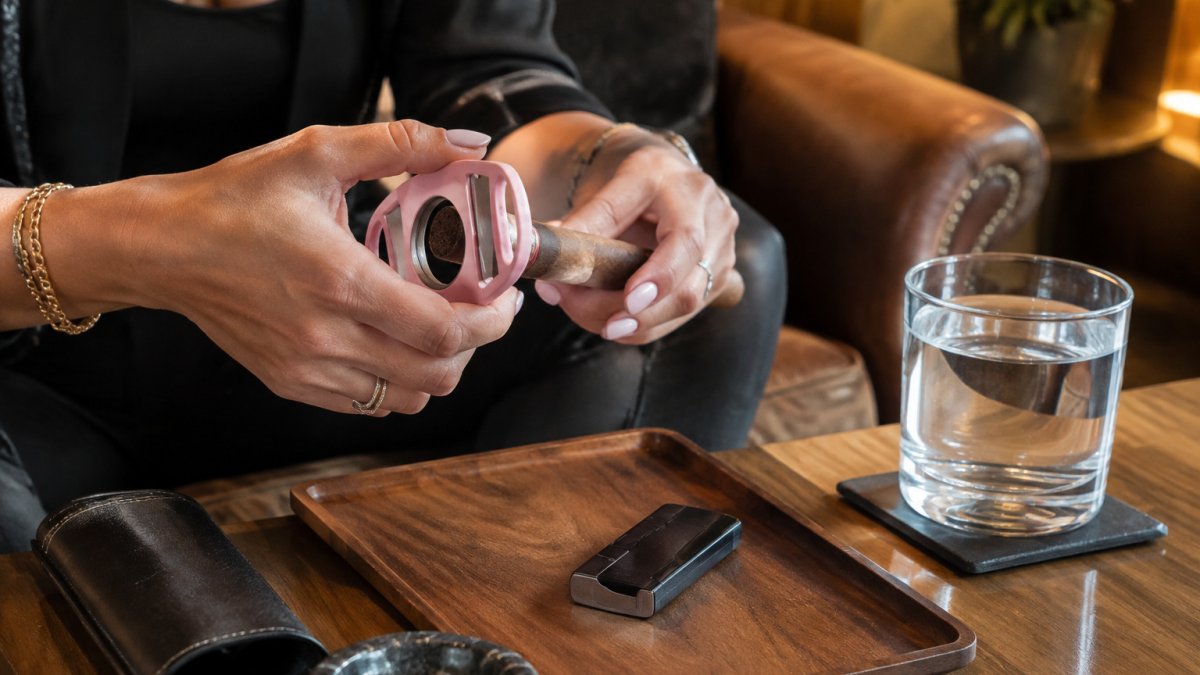
- Cut about 1/8 inch, or roughly two-thirds of the cap. Rest the cutter flat on a table, place the cigar in the opening, and close the blades in one firm motion. A dull or twisting cut tears the wrapper and can send loose tobacco into your mouth.
- Check the draw before you light. Take a cold draw (pull air through the unlit cigar). It should feel like sipping through a straw with mild resistance. If it is tight, make a second very thin cut. If it is wide open and loose, you cut too far and the smoke will run hot.
Watch out: cutting past the shoulder lets the wrapper unravel, and no amount of careful lighting will save a cigar that is falling apart.
Lighting: Toast, Then Draw
- Toast the foot. Hold the cigar at a 45-degree angle just above a flame, not in it, and rotate slowly for 10 to 20 seconds until the foot is evenly blackened and beginning to glow. Toasting drives off moisture and helps an even light.
- Light gently. Bring the flame close, take slow draws, and rotate the cigar as you go. Keep the flame out of direct contact with the tobacco; you want heat, not scorch.
- Check the burn. Blow lightly on the foot. An even orange ring means a good light. A patchy or lopsided glow means you need another few seconds of toasting on the dark side.
- Let it settle. Rest the cigar in an ashtray for 30 to 60 seconds and take a few light draws. This lets the first inch settle and keeps the burn cool.
Matches and soft flames work but can impart a chemical taste if you let the sulfur or fuel touch the tobacco.
A pink cigar cutter in a warm lounge setting makes a fitting image for this step:
Fixing a Bad Cut or Light
If the draw is still tight after a second cut, gently massage the cigar between your fingers to loosen the bunch, or use a draw poker if the lounge has one. If the light is uneven, touch up the lagging side with the flame and rotate.
The steps below summarise the cutting and lighting process, with the key cut and timing details from the guide.
| Step | What to do | Time or check |
|---|---|---|
| Find the cap line | Locate the seam where the cap overlaps the wrapper | Cut only about 1/8 inch |
| Cut the cap | Use a firm, single motion with a double-blade guillotine | About two-thirds of the cap |
| Check the draw | Take a cold draw before lighting | Should feel like sipping through a straw |
| Toast the foot | Rotate just above the flame at 45 degrees | 10 to 20 seconds |
| Light gently | Take slow draws and rotate while lighting | Keep flame off the tobacco |
| Check the burn | Blow lightly on the foot | Even orange ring means a good light |
| Let it settle | Rest in an ashtray and take light draws | 30 to 60 seconds |
How to Smoke a Cigar: Draw, Pace, and Ash Management
Smoking a cigar is slower than smoking a cigarette. Pace yourself. Take a few gentle draws, then let the cigar rest between puffs.
Ash builds up at the tip. Let it grow to about an inch before tapping it off, which helps the cigar burn evenly. Knock the ash into the tray gently, not against the rim, to protect the wrapper.
Watch for these common problems:
- Tunneling: The center burns faster than the edges. Rotate the cigar as you smoke.
- Canoeing: One side burns faster. Slow down and turn the cigar more often.
- Going out: Relight with a gentle touch of the flame and a few light draws.
Drawing Smoke Without Inhaling and Keeping It Cool
Cigar smoke goes in your mouth, not your lungs. Take a small amount of smoke, hold it briefly, and let it out. Inhaling cigar smoke into the lungs is not recommended.
If the smoke feels harsh, take smaller draws and wait longer between them. Keeping the cigar cool helps, too. Avoid puffing fast, since heat builds up quickly.
Cigar Lounge Etiquette for Women: Sharing, Hygiene, and Confidence
Good manners go a long way in a lounge. A few habits make you look like you belong there.
- Ask before you share a lighter, cutter, or ashtray.
- Keep your cigar on a stand or in the tray when you are not smoking it.
- Do not touch someone else's cigar or gear without permission.
Confidence comes from preparation. The more you know about the basics, the less attention you will feel you are drawing. Cigar lounge culture is welcoming when you approach it with curiosity.
Nicotine Safety, Pairing Drinks, and What to Do If You Feel Unwell
Cigars contain nicotine, and nicotine affects everyone differently. Health risks from cigar smoking are real, including risks to the mouth, throat, lungs, and heart, and it is worth making an informed choice before you light up. If you have a heart condition, are pregnant, or take medication, speak with a doctor first.
Why Nicotine Hits Some People Harder
A mild cigar on a full stomach is usually manageable for a first-timer; a strong cigar on an empty stomach is the classic recipe for a bad first experience. Body weight, hydration, caffeine intake, and whether you have eaten all change how hard a given cigar lands.
Common early signs that you have had enough:
- Dizziness or light-headedness
- Nausea or a queasy stomach
- A racing or pounding heart
What to Do If You Feel Unwell
- Put the cigar down. Do not try to finish it. A half-smoked cigar is not a failure.
- Get fresh air. Step outside or to a well-ventilated area.
- Sit down and sip water. Slow, small sips. Avoid sugary drinks, which can make nausea worse.
- Eat something mild if you can. A cracker or a piece of bread helps settle the stomach.
- Wait it out. Mild reactions often ease once you stop smoking and rest.
Seek medical help if symptoms do not ease, if you faint, if you have chest pain, or if you feel severely unwell. When in doubt, call for help rather than waiting.
Prevention Beats Recovery
- Eat a light meal before you smoke, not a heavy one.
- Keep water nearby and sip through the session.
- Choose a mild cigar for your first few sessions.
Pairing Drinks Without Overdoing It
Pairing a drink with your cigar can make the session more enjoyable, but the pairing should support the experience, not compete with it. Water is the safest default and clears the palate between puffs. Light, non-alcoholic options such as sparkling water with citrus or iced tea work well for milder cigars. If you drink alcohol, keep it light and pace it; alcohol lowers your awareness of nicotine effects and can make dizziness worse.
Here is a quick safety checklist:
- Eat before you smoke.
- Keep water nearby.
- Choose a mild cigar for your first sessions.
Storing Your Cigars and Booking Your Next Lounge Night
Once you have a cigar you enjoy, store it properly so it stays fresh. You can browse the Patch Collection for accessories that help keep them stored well. For use at home, the Ashtray Single Cigar Burgundy is a handy companion after a first smoke.

Browse the full range at Lipstick and Smoke and find pieces that match your style.
Ready to try your first lounge night? Pick your cigar, pack your case, and enjoy the ritual at your own pace.
Frequently Asked Questions
How should a woman smoke a cigar for the first time?
Start with a small, mild cigar and plan for about 45 minutes. Cut the cap cleanly, toast the foot evenly without direct flame on the wrapper, and take gentle puffs. Hold the smoke in your mouth and let it go; there is no need to inhale. Rest the cigar in the ashtray between draws so it stays lit and cool. Stop if you feel dizzy or nauseated, sit down, drink water, and eat something with sugar before continuing or leaving.
What are some tips for first-time cigar smokers?
Choose a mild cigar in a size you can finish comfortably. Smoke on a full stomach rather than an empty one, and avoid alcohol while you learn. Pace yourself by taking fewer, slower puffs and letting the cigar rest between draws. Keep the cigar from going out by puffing lightly rather than hard. Pay attention to how your body responds, and treat the first session as a learning experience rather than a test of endurance.
How do you cut and light a cigar properly?
Use a sharp cutter and remove only the cap, about 2 to 3 millimetres from the tip, so the draw stays open. Rotate the cigar while toasting the foot with a butane lighter or cedar spill, keeping the flame just above the foot until it glows evenly. Avoid direct flame on the wrapper. Take a few gentle draws to establish an even burn before settling into a relaxed rhythm.
Is one or two cigars a week okay for an occasional smoker?
Occasional smoking is a personal choice, and it still carries health risks, including risks linked to nicotine and tobacco exposure. If you choose to smoke, keeping sessions infrequent and unhurried is the approach most beginners take. Store cigars properly so they stay fresh, and never smoke when you feel unwell. If you have a heart condition, are pregnant, or take medication, check with a doctor before you smoke.
